Friday, 5 October 2012

Tuesday, 2 October 2012
Planning Schedule
- Upload location research and VO - Friday 5th.
- Stills and notes on locations - Monday 8th.
- Influential actors and aesthetics - Tuesday 9th.
- Costume - Thursday 11th.
- Actual actors, weigh up different potential choices - Thursday 11th.
- Narrative - Monday 15th.
- Shot list - Tuesday 16th.
Wednesday, 19 September 2012
Trailer Analysis - Graphics
Children of Men
This trailer makes good use of graphics to tell the story - it uses graphic texts to tell the story throughout the trailer, though manages to not overuse them. If I were to mainly use graphics as a means of telling the story, I would, like this trailer, limit myself to two graphic titles per act, and make sure they have a memorable and meaningful pattern with not too much text within them.
Marathon Man
This is a very different trailer to Children of Men, and is of course rather dated given that it is from 1976. I looked at this to show how older trailers have some similar conventions to modern trailers: while graphic text used to tell the story is often centered, acting credits are often put to the side of the frame to demonstrate the actor it is drawing attention to.
Drive
This trailer, like the trailer for Marathon Man, uses graphics mainly to demonstrate the actors involved, and also like the trailer above it puts the text to a side and artfully placed to be at a different side of the frame to the actor. It is clear that having acting credits at a side of the frame, and towards the end of a trailer, is a universal convention of trailers though these two trailers I have chosen to demonstrate this more individually choose to put the actual film title itself to the side of the frame.
Shame
One specific thing I noted about the graphics for this trailer is that when it announces the cast members, their surnames are in bold - this is a subtle yet in my opinion distinctive stylistic choice, as it gives a sense of importance to the actors involved and gives the trailer a highly professional edge. This technique is also used in the poster for the film American Beauty.
Tuesday, 18 September 2012
Trailer Analysis - Music
Drive
Bronson
These are examples of trailers which use a pop soundtrack. To me, using this kind of sountrack gives the trailer an iconic, cult quality and also serves to accentuate the violence shown, as the contemporary, feminine sounding music acts as a counterpoint to it (something the director of the film himself said when choosing the soundtracks to this film and Drive). However, I will not be able to get my hands on genuine music like this easily, so if I was to use music of this style it would have to be written by someone I know, and as a result it would have to be far more understated and with the sound of an actual soundtrack piece rather than a mainstream song. This is an example of the kind of sound that I think I would realistically be able to have written for my trailer:
Bronson
These are examples of trailers which use a pop soundtrack. To me, using this kind of sountrack gives the trailer an iconic, cult quality and also serves to accentuate the violence shown, as the contemporary, feminine sounding music acts as a counterpoint to it (something the director of the film himself said when choosing the soundtracks to this film and Drive). However, I will not be able to get my hands on genuine music like this easily, so if I was to use music of this style it would have to be written by someone I know, and as a result it would have to be far more understated and with the sound of an actual soundtrack piece rather than a mainstream song. This is an example of the kind of sound that I think I would realistically be able to have written for my trailer:
The Master
This trailer music has an understated quality which is easy to replicate. The sound of this specific trailer music is not one that I would want to replicate, as I am going for a more modern sound. However, the repetitive nature of it works particularly well, though this is admittedly a teaser trailer while I am hoping to make a proper theatrical trailer. Here is an example of a simple, understated and somewhat repretitive soundtrack which has a more modern, quiet feel and a cinematic quality that could work better at some point in a theatrical trailer.
Sunday, 16 September 2012
Trailer Analysis - Structure
The most common structure for a modern trailer is the three-act structure: most films themselves adopt three-act structures and as a result, structuring a trailer in this way is the best way to give some plot exposition as well as setting a tone and mood for the film, one of the main functions of a trailer. These are two examples of trailers that have fairly rigid three-act structures:
The first act of both these trailers serves to introduce the main characters and give them some exposition: in the case of Drive, it shows how the main character's life revolves around driving, from working as a stunt driver for films to being a wheelman for heists. The second act of this trailer revolves around events and conflicts which develop the story and give way to the events that take place throughout the film: as a character driven film, this act begins with the Driver'smeeting with the primary antagonist, Bernie Rose, and tells the story of how Driver becomes involved with Irene and then helps her husband with a heist which goes wrong, ending with Bernie and another gangster Nino ordering a hit on the Driver. The third act is a montage, demonstrating various scenes from the film and giving an idea as to what kind of style the film will have (this particular trailer demonstrates some of the brutal violence that takes place in the film and sets it to classical music, demonstrating the edgy, slightly arthouse feel of it).
While I like the look and feel of the film, for me the structure of the trailer is slightly formulaic: this trailer has much in common with most modern trailers, for example it does not leave that much of the story to the imagination and uses fades to black frequently. An example of a trailer that does not use these types of trailer conventions to as high a degree is the second trailer for the film Inception: admittedly, the trailer I am going to make will be longer than this one though there are aspects of it that I would like to borrow in order to make a slightly more interesting trailer.
The trailer for this vaguely resembles a three act structure - the first part of the trailer acts as exposition, introducing the character of Cobb and giving some explanation to the concept behind the film. However, there is less of a distinction between the second and third acts - rather than have a second act that develops the plot, the whole second half of this trailer, with the aid of music, is a montage of sorts though tells some of the story without giving away too many plot details. Rather than using fades to black to separate clips from one another, the Inception trailer puts the studio idents after the first act to distinguish it from the rest of the trailer and uses graphics with taglines and actors as the trailer escalates. Something I particularly liked in the trailer was the way in which it consistently reverted back to the same shot of Leonardo DiCaprio's character falling into a bathtub in slow motion: it is in these shots that fades to black would usually be used, though having this shot cut back to repeatedly adds more style to the trailer and puts emphasis on the shot in question - if I adopted this approach to my trailer I would certainly want to have an impressive, long lasting shot that I could repeatedly come back to rather than fade to black.
The first act of both these trailers serves to introduce the main characters and give them some exposition: in the case of Drive, it shows how the main character's life revolves around driving, from working as a stunt driver for films to being a wheelman for heists. The second act of this trailer revolves around events and conflicts which develop the story and give way to the events that take place throughout the film: as a character driven film, this act begins with the Driver'smeeting with the primary antagonist, Bernie Rose, and tells the story of how Driver becomes involved with Irene and then helps her husband with a heist which goes wrong, ending with Bernie and another gangster Nino ordering a hit on the Driver. The third act is a montage, demonstrating various scenes from the film and giving an idea as to what kind of style the film will have (this particular trailer demonstrates some of the brutal violence that takes place in the film and sets it to classical music, demonstrating the edgy, slightly arthouse feel of it).
While I like the look and feel of the film, for me the structure of the trailer is slightly formulaic: this trailer has much in common with most modern trailers, for example it does not leave that much of the story to the imagination and uses fades to black frequently. An example of a trailer that does not use these types of trailer conventions to as high a degree is the second trailer for the film Inception: admittedly, the trailer I am going to make will be longer than this one though there are aspects of it that I would like to borrow in order to make a slightly more interesting trailer.
The trailer for this vaguely resembles a three act structure - the first part of the trailer acts as exposition, introducing the character of Cobb and giving some explanation to the concept behind the film. However, there is less of a distinction between the second and third acts - rather than have a second act that develops the plot, the whole second half of this trailer, with the aid of music, is a montage of sorts though tells some of the story without giving away too many plot details. Rather than using fades to black to separate clips from one another, the Inception trailer puts the studio idents after the first act to distinguish it from the rest of the trailer and uses graphics with taglines and actors as the trailer escalates. Something I particularly liked in the trailer was the way in which it consistently reverted back to the same shot of Leonardo DiCaprio's character falling into a bathtub in slow motion: it is in these shots that fades to black would usually be used, though having this shot cut back to repeatedly adds more style to the trailer and puts emphasis on the shot in question - if I adopted this approach to my trailer I would certainly want to have an impressive, long lasting shot that I could repeatedly come back to rather than fade to black.
Saturday, 15 September 2012
What are the conventions of your chosen film genre and which aspects of trailers in this genre influence you?
The genre I have chosen for my
trailer work is psychological thriller – a genre generally associated with
directors such as Alfred Hitchcock and Christopher Nolan that has been very
prominent in the 21st century with films like Memento, Moon and The
Prestige. These kinds of films generally rely on mystery and suspense rather
than action set pieces, and I have found that as a result, the trailers are
generally more taut than exhilarating and are often story/character based.
A common convention of
psychological thrillers is mentally unstable characters, who provide the
‘psychological’ aspects of the genre. Sometimes, these characters are villains
who are insane or sociopathic, for example in No Country For Old Men, though
many psychological thrillers also feature mentally troubled main characters who
can range from characters with mental conditions such as amnesia and
anterograde amnesia (The Bourne films and Memento respectively) to straight out
psychopaths (American Psycho). Most thriller trailers of this genre go a long
way to demonstrate the psychological themes and psychologically troubled
characters – for example, the first thing the trailer for No Country For Old
Men does is establish the character of psychopathic killer Anton Chigurgh in
one of his iconic moments, when he tosses a coin to determine whether or not he
will kill someone. Memento particularly cleverly demonstrates the psychological
condition of the main character, which is anterograde amnesia meaning that he
cannot make new memories: the main character is seen having a conversation with
someone about his condition, and at the end of the trailer he is seen having
the same conversation with the same person before saying ‘I’ve told you this
before, haven’t I?’ This is the kind of psychological trickery I would like to
include in my trailer, as it adds depth to the story and makes you think, as
well as being a slightly comedic beat.

The way most psychological
thrillers build suspense is by introducing characters and ideas that are not to
be trusted. Inception, an action thriller with strong psychological elements,
lets the audience decide for themselves which parts of the film were actually
‘real’. Other thrillers in this style often have morally dubious, untrustworthy
or unstable characters, for example the character of Travis Bickle in Taxi
Driver – this character is an iconic example of an anti-hero in cinema. Zodiac,
based on a true story, also introduces several different characters in the hunt
to catch a killer though they are consumed by their obsessions and fail to
catch the zodiac killer as a result.
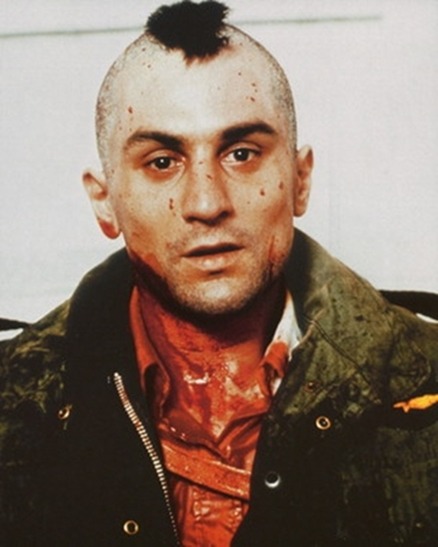
Most psychological thrillers also
have male protagonists and explore the minds of men, and in the vein of these
films I would make my main character male. Drive, for example, is based around
a fairly understated crime story though it can be said to have psychological
aspects as the second half of the film begins to explore the psychotically
violent nature of a seemingly mild-mannered protagonist. The trailer as a
result accentuates the different and often dangerous aspects of the male
protagonist’s mind: he is shown violently assaulting and beating a man in an
elevator while the music that plays is calm and classical, which draws
attention to the shocking violence portrayed. At the end of the trailer, he is
shown in one shot walking a woman and child to their apartment out of
compassion set to the same classical music, though in the next shot the music
cuts out abruptly as the character suddenly shoots a man down. In this way, the
trailer juxtaposes the different aspects of the main character that are
introduced at different points in the film in no more than five seconds and I
take the view that my trailer would benefit from this shock factor and the
demonstration of the character’s psyche.

The style of many psychological
thrillers is often understated – most of them do not have particularly dramatic
music or visuals (though that is not to say that these two components of
filmmaking are unimportant to thrillers of this style). In comparison to
trailers for more action and horror based thrillers such as Prometheus, which
has an intense combination of dramatic visuals and ominous music, psychological
thriller trailers are fairly quiet – for example, the trailer for No Country
For Old Men has little to no music and is mainly based around dialogue and
presenting scenes of tension. The trailer for A History of Violence, another
highly psychological thriller, uses sound effects to accentuate the tension and
drama. Moon, meanwhile, uses calm piano music from the film’s score to present
the daily life of the main character, while the most dramatic parts of the
trailer are notable for an absence of music – at one point, when the main
character comes across a clone of himself, the music abruptly and dramatically
cuts out. Some psychological thrillers, and in particular the trailers for
them, are highly stylized. The trailer
for The Master, for example, uses percussive and unconventional music, as well
as having drawn out, slow paced camera shots such as one of Joaquin Phoenix
following a car by a river and one of him walking across a street in a suit.
This style creates tension simply because it is unexpected for a film trailer –
most modern trailers are fast paced and build up to a finish by using
increasingly dramatic music and visuals – this, however, layers lines of
dialogue on top of one another which is a more unconventional way of adding
drama to the story and is far more psychological, given that the dialogue
itself relates to the psychological condition of the main character who is seen
walking down the street while all of this is happening.

Most psychological thrillers I
have seen often have complex and intricate plot lines – some feature plot
twists (e.g. Fight Club) while others will have nonlinear plotlines: the main
story of Memento, for example, is told in reverse chronology, while The
Prestige unfolds in random order. As a result, trailers for psychological
thrillers have quite a lot of storytelling to do in order to give the audience
an idea of what the film will be like. Many trailers I have viewed can be split
in to segments which are distinguished from one another by, for example, the
use of music cues and fades to black. The trailer for Fight Club, for example,
uses five or six different bits of music to describe the different plot ideas
that come in to play. The voiceovers of Edward Norton’s character also mean exposition
can be given to the story within the 2 minute trailer – he introduces different
characters, often at the end and beginning of one of the ‘segments’ of the
trailer – for example, the character of Tyler Durden is introduced when the
narrator states ‘I longed for a different life… and this is how I met Tyler
Durden’. This is when the music changes to become more dramatic. In this way,
the film manages to emphasize certain plot points through stylistics rather
than telling too much of the story, which is a highly effective method of
putting together a trailer for a psychological thriller.

The structure of the trailer for
Memento is also particularly clever, as it introduces the concept that the film
is based on by using the different characters that the main character, Leonard
Shelby, comes in to contact with throughout the course of the film. For
example, he meets a character named Teddy who is first through a title card
that states ‘friend’, though another appearance of him in a trailer is preceded
by a title card stating ‘liar’, demonstrating the dubious nature of Leonard’s
memories of the people he has met and the things he has done, a theme that is
important later on in the film. Unlike the trailer for Fight Club, this trailer
uses similar music cues and never modulates in tone: the distinction between
these two trailers is, as a result, that Fight Club develops the themes and
characters by suggesting different aspects of the story, while Memento does the
same by introducing the basic plot concept.

A graphic from the Memento trailer
The psychological thriller genre
is often based on complexity and intricate storylines – both the characters and
plot present within them are often multi-layered and particularly dark. As a
result, these types of films are often thought provoking and stylized in ways
that make the audience ask questions as well as draw out both emotive responses
from them.
Tuesday, 21 August 2012
A2 Summer Trailer Research Work
1: The Master (2012)
This is not exactly a thriller or horror trailer, though it certainly has an aspect of mystery which is what I would like my trailer to rely heavily on - I particularly liked the classic style of it and the way it was edited, for example the fact that it is mainly comprised of long shots that have an ominous feel to them such as the one that zooms in on Joaquin Phoenix's face as he walks. I also liked the fact that it was edited to leave a lot of ambiguities and unanswered questions - for example, there is a brief shot of Philip Seymour Hoffman about to address the camera about something unclear to the viewer, and most of the dialogue is very ambiguous e.g. 'you've wandered from the true path' and 'you seem to inspire something in him'. I would certainly borrow from this trailer in this aspect, as mystery is which makes most trailers particularly thrilling. The look and feel of the trailer is something I particularly liked as well - having a similar look to this, as well as similar music, is something I may consider.
2: No Country For Old Men (2007)
In some ways this trailer is very similar to the trailer for The Master - it is never particularly scary or suspenseful, mainly mysterious - however, this is a style that, with the right footage, can be particularly gripping. This trailer, for example, builds up to the action but never actually shows it, leaving it to the imagination of the audience. Like many trailers, to do this it often cuts to black before showing something, which is a convention that I would likely follow in my own film trailer. Avoiding showing the actual action and instead implying it also gives the trailer as a whole a particularly suspenseful paces, as there is a sustained build up with no actual relief.
3: The Cabin in the Woods (2012)
This trailer feels more like a proper horror film than the trailers of the other two films, which are more mystery and suspense thrillers. The film itself is something of a pastiche of many other modern horror films so the trailer as well as the film itself includes many horror conventions - for example, at the beginning the music suddenly stops playing which immediately changes the atmosphere and increases the suspense.
4: Moon (2009)
This is a psychological thriller trailer that I liked because it introduces the more thought provoking ideas of the story without giving away too much. Like No Country For Old Men, it suggests certain ideas without actually showing them on screen, though while No Country For Old Men suggests conflict and violence, this manages to cleverly suggest the idea of cloning that is introduced to the film without properly showing it. I particularly liked the way the clone was first introduced, which is done in a style traditional with some trailers. The music fades out and there is a dramatic silence when the clone is shown, but it cuts away from any further plot details to instead show the critical reception. I particularly liked the fact that the situation in question was set up to be something mundane, which made the reveal all the more shocking.
5: Prometheus (2012)
This is a trailer for a sci-fi action/horror film and the trailer is suitably thrilling thanks to many different devices used within it. The music is iconic, unique and intense, and uses dramatic sound as well as music itself to create tension - something which has become particularly common in modern trailers (other trailers that have become popular due to their use of sound include Inception). In the second half of the trailer, flashes of different dramatic camera shots are shown which adds suspense and intensity to the trailer as well, a technique that can quite easily be replicated and is also used in many different trailers, particularly horror and action trailers.
6: Drive (2011)
Like many trailers for action films, Drive manages to blend telling some of the story with demonstrating the action - most of the dialogue is done in voiceover while the action is shown playing out, something which happens in most action trailers now. Different music is used throughout the trailer which splits it in to different parts, a trailer making device that can be used to, for example, demonstrate different characters in the film or different aspects of the story. I particularly liked the use of classical music at the end of the trailer, as it demonstrates the arthouse aspects of the film and gives the audience more of an insight into what the film will feel like, rather than tell the entire story.
7: A History of Violence (2007)
Like some of the other trailers I have used such as Moon and The Cabin in the Woods, this trailer starts off in a mundane way, using titles to describe the quietness of the town the main characters live in as well as focusing on the everyday lives of the characters (one character is shown playing baseball, for example, while the main character works at a cafe). Like the other trailers, the change in tone and danger is signified by the music cutting out abruptly. This particular trailer also features actor names, demonstrating the ensemble cast.
8: Memento (2000)
This is not exactly a thriller or horror trailer, though it certainly has an aspect of mystery which is what I would like my trailer to rely heavily on - I particularly liked the classic style of it and the way it was edited, for example the fact that it is mainly comprised of long shots that have an ominous feel to them such as the one that zooms in on Joaquin Phoenix's face as he walks. I also liked the fact that it was edited to leave a lot of ambiguities and unanswered questions - for example, there is a brief shot of Philip Seymour Hoffman about to address the camera about something unclear to the viewer, and most of the dialogue is very ambiguous e.g. 'you've wandered from the true path' and 'you seem to inspire something in him'. I would certainly borrow from this trailer in this aspect, as mystery is which makes most trailers particularly thrilling. The look and feel of the trailer is something I particularly liked as well - having a similar look to this, as well as similar music, is something I may consider.
2: No Country For Old Men (2007)
In some ways this trailer is very similar to the trailer for The Master - it is never particularly scary or suspenseful, mainly mysterious - however, this is a style that, with the right footage, can be particularly gripping. This trailer, for example, builds up to the action but never actually shows it, leaving it to the imagination of the audience. Like many trailers, to do this it often cuts to black before showing something, which is a convention that I would likely follow in my own film trailer. Avoiding showing the actual action and instead implying it also gives the trailer as a whole a particularly suspenseful paces, as there is a sustained build up with no actual relief.
3: The Cabin in the Woods (2012)
This trailer feels more like a proper horror film than the trailers of the other two films, which are more mystery and suspense thrillers. The film itself is something of a pastiche of many other modern horror films so the trailer as well as the film itself includes many horror conventions - for example, at the beginning the music suddenly stops playing which immediately changes the atmosphere and increases the suspense.
4: Moon (2009)
This is a psychological thriller trailer that I liked because it introduces the more thought provoking ideas of the story without giving away too much. Like No Country For Old Men, it suggests certain ideas without actually showing them on screen, though while No Country For Old Men suggests conflict and violence, this manages to cleverly suggest the idea of cloning that is introduced to the film without properly showing it. I particularly liked the way the clone was first introduced, which is done in a style traditional with some trailers. The music fades out and there is a dramatic silence when the clone is shown, but it cuts away from any further plot details to instead show the critical reception. I particularly liked the fact that the situation in question was set up to be something mundane, which made the reveal all the more shocking.
5: Prometheus (2012)
This is a trailer for a sci-fi action/horror film and the trailer is suitably thrilling thanks to many different devices used within it. The music is iconic, unique and intense, and uses dramatic sound as well as music itself to create tension - something which has become particularly common in modern trailers (other trailers that have become popular due to their use of sound include Inception). In the second half of the trailer, flashes of different dramatic camera shots are shown which adds suspense and intensity to the trailer as well, a technique that can quite easily be replicated and is also used in many different trailers, particularly horror and action trailers.
6: Drive (2011)
Like many trailers for action films, Drive manages to blend telling some of the story with demonstrating the action - most of the dialogue is done in voiceover while the action is shown playing out, something which happens in most action trailers now. Different music is used throughout the trailer which splits it in to different parts, a trailer making device that can be used to, for example, demonstrate different characters in the film or different aspects of the story. I particularly liked the use of classical music at the end of the trailer, as it demonstrates the arthouse aspects of the film and gives the audience more of an insight into what the film will feel like, rather than tell the entire story.
7: A History of Violence (2007)
Like some of the other trailers I have used such as Moon and The Cabin in the Woods, this trailer starts off in a mundane way, using titles to describe the quietness of the town the main characters live in as well as focusing on the everyday lives of the characters (one character is shown playing baseball, for example, while the main character works at a cafe). Like the other trailers, the change in tone and danger is signified by the music cutting out abruptly. This particular trailer also features actor names, demonstrating the ensemble cast.
8: Memento (2000)
My favourite aspect of this trailer is the way in which it cleverly presents the concept of anterograde amnesia the film and what it leads to within the story. For example, the opening of the trailer sees the main character explaining his condition to another man, and at the end of the trailer he does the exact same thing, eventually saying 'I've told you this before, haven't I?' The trailer also introduces characters under title cards such as 'friend' and 'lover', though the idea that the protagonist of the film cannot fully know them is introduced when they are re-introduced in the trailer as, for example, 'liar'.
Subscribe to:
Posts (Atom)